Guide
NPS vs eNPS: What Is the Difference and How to Measure Both
NPS and eNPS look almost identical. Same 0 to 10 question, same math. But they measure two different groups of people, and mixing them up leads to bad decisions. This guide explains the difference and shows how to run both with a free scored quiz.
Quick answer
What is the difference between NPS and eNPS?
NPS (Net Promoter Score) asks customers how likely they are to recommend your product or service, while eNPS (Employee Net Promoter Score) asks employees how likely they are to recommend your company as a place to work. Both use a 0 to 10 scale and the same formula: percent promoters minus percent detractors. The difference is the audience, the wording of the question and what you do with the answer.
NPS vs eNPS explained
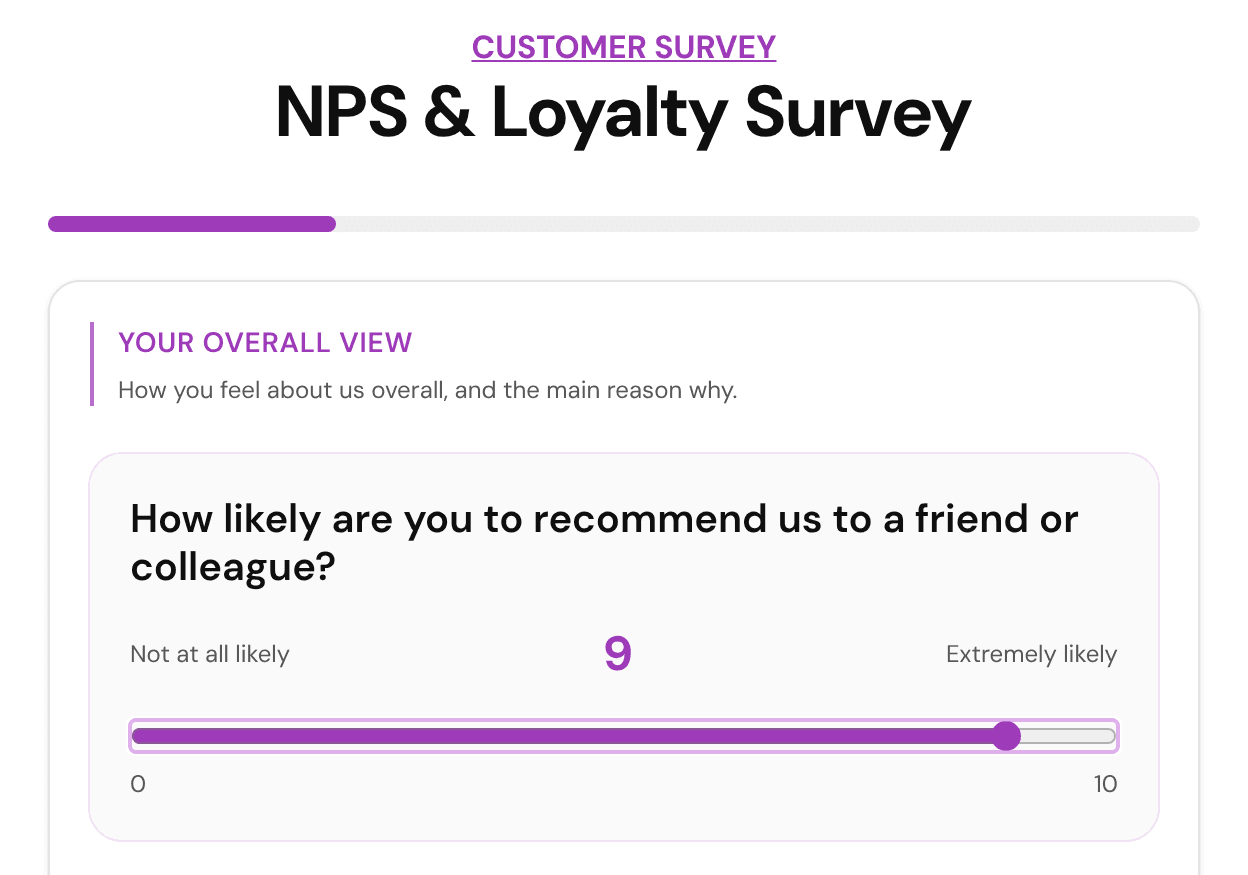
NPS measures customer loyalty. You ask one question: "How likely are you to recommend us to a friend or colleague?" Answers run from 0 to 10. People who answer 9 or 10 are promoters, 7 or 8 are passives, and 0 to 6 are detractors. Your score is the percent of promoters minus the percent of detractors, so it ranges from -100 to 100.
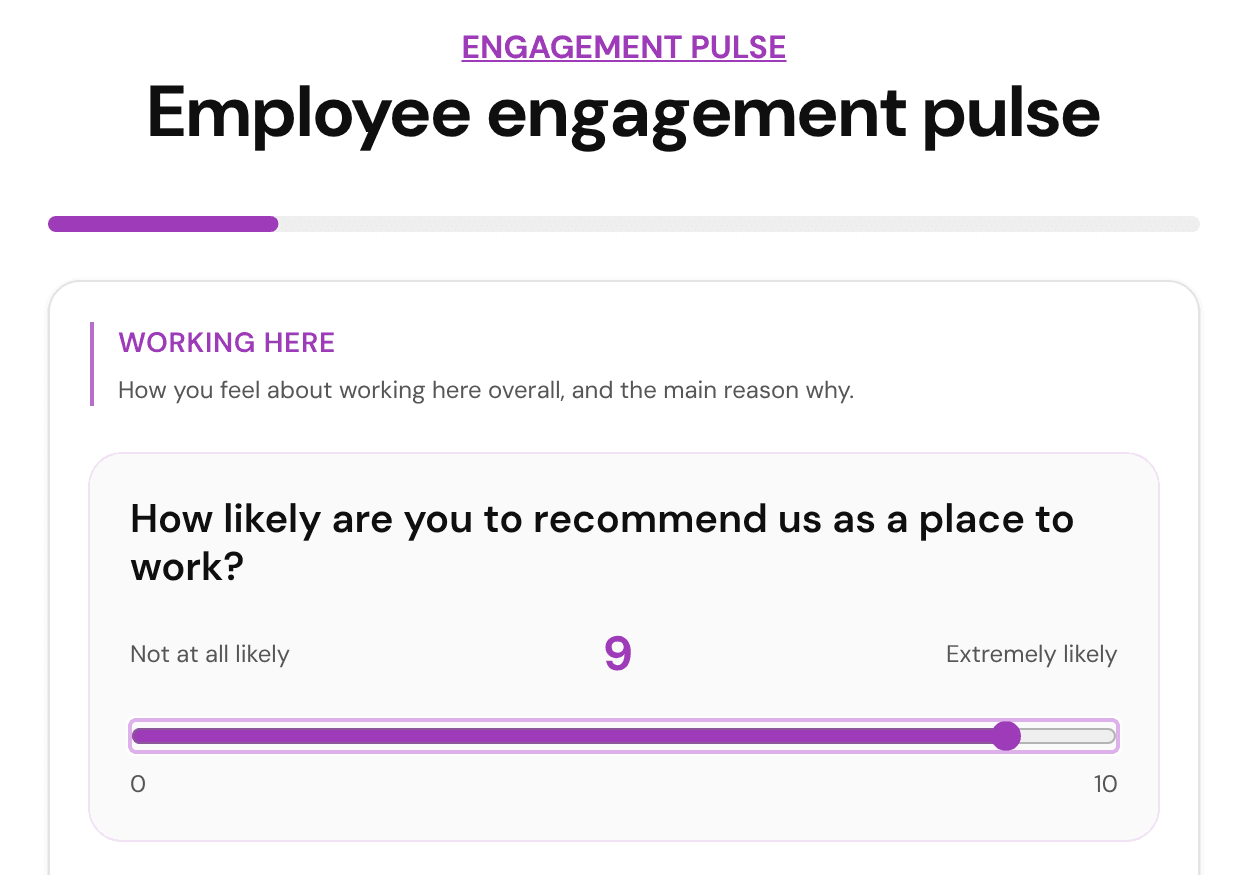
eNPS uses the same scale and the same math, but the audience is your team and the question changes: "How likely are you to recommend this company as a place to work?" The score tells you about morale and retention risk, not about sales. The practical differences are who answers, how honest they feel they can be, and what action follows. Customer detractors need a recovery conversation. Employee detractors need a safe place to say what is wrong, which is why eNPS surveys should not ask for names.
Why run NPS and eNPS with FluoTest
FluoTest is a free scored quiz builder. You get unlimited quizzes and responses, all question types, score tiers and routing, so you can build one survey for customers and another for your team without paying per response. Conditional branching lets you ask a different follow-up question to detractors than to promoters.
Results can be exported to CSV, and basic analytics are free. Integrations with Brevo, Zapier, GTM and Meta Pixel are free too, so a low score can trigger a follow-up in the tools you already use. If you want to remove the FluoTest badge from a customer-facing survey, that is part of Pro at EUR 12 per month.
Try it: fluotest.com
How to measure NPS and eNPS step by step
1. Decide who you are asking
Pick one audience per survey. Customers get an NPS survey. Employees get an eNPS survey. Never combine them in one quiz, because the answers mean different things and the scores should be tracked separately.
2. Write the one core question
For NPS, ask how likely they are to recommend your product or service to a friend or colleague. For eNPS, ask how likely they are to recommend your company as a place to work. Use answer options from 0 to 10.
3. Group answers into promoters, passives and detractors
Set score tiers so 9 to 10 is promoter, 7 to 8 is passive and 0 to 6 is detractor. This makes each respondent land in a clear group without manual sorting.
4. Add one open follow-up question
Use conditional branching to ask promoters what they value most and detractors what one thing would improve their experience. The number tells you where you stand. The comment tells you why.
5. Protect honesty in the eNPS survey
Do not add name or email fields to the employee survey, and tell your team how results will be used. People only give honest low scores when they trust that nothing bad follows.
6. Send it and calculate the score
Share the quiz link. When responses come in, export them to CSV, count the share of promoters and detractors, and subtract. Repeat on a fixed schedule so you can compare over time.
7. Act on the detractors
For NPS, reach out personally to unhappy customers. For eNPS, share the main themes with the team and name one change you will make. A score with no action teaches people to stop answering.
Try it:
Build your free surveyBenefits of tracking NPS and eNPS separately
- -You see customer loyalty and team morale as two clear numbers instead of one blurry sentiment.
- -A falling eNPS can warn you about retention problems before people leave.
- -A falling NPS shows you where customers lose trust before it hits revenue.
- -The same simple method works for both, so you only learn one process.
- -Follow-up questions explain the score, so you know what to fix first.
- -A free tool with unlimited responses means you can survey as often as you need.
Who should use NPS and eNPS surveys
- -Coaches and consultants who want to know if clients would recommend them.
- -Agencies that need a quick loyalty check after each project.
- -Service business owners with a small team who want honest feedback on workplace culture.
- -HR and operations leads who want a simple pulse check without buying survey software.
- -Founders who want to track both customer and team sentiment over time.
Frequently Asked Questions
What is the difference between NPS and eNPS?
NPS asks customers whether they would recommend your product or service. eNPS asks employees whether they would recommend your company as a place to work. The scale and formula are the same, but the audience, the question wording and the follow-up actions are different.
How do you calculate NPS and eNPS?
Count the share of respondents who answer 9 or 10 (promoters) and the share who answer 0 to 6 (detractors). Subtract the detractor percentage from the promoter percentage. The result is a number from -100 to 100. Passives, who answer 7 or 8, count in the total but not in either group.
Is eNPS the same as employee satisfaction?
No. Satisfaction asks how happy people are. eNPS asks whether they would recommend the company, which is a loyalty signal. A person can be fairly satisfied and still not recommend the company, so the two can tell you different things.
Should an eNPS survey be anonymous?
In most cases yes. People give more honest low scores when they do not fear consequences. Avoid asking for names or emails in the employee survey, and explain upfront how you will use the results.
Can I run NPS and eNPS surveys for free?
Yes. FluoTest's free plan includes unlimited quizzes and responses, all question types, score tiers, conditional branching and CSV export. You can build one quiz for customers and another for your team without paying per response.
Build your NPS or eNPS survey for free
Create a scored survey in minutes and see where your customers and team stand.
What you get with FluoTest:
- - Unlimited quizzes and responses on the free plan
- - All question types
- - Score tiers and routing
- - Conditional branching for follow-up questions
- - CSV export of your results
- - Brevo, Zapier, GTM and Meta Pixel integrations
- - Welcome and Thank You pages
Questions? Read our pricing page or browse quiz templates.